
- What Is Endocarditis Prophylaxis?
- Why Does Infective Endocarditis Occur?
- Who Requires Endocarditis Prophylaxis?
- Which Procedures Require Prophylaxis?
- How Is Endocarditis Prophylaxis Administered?
- Do I Need to Take Antibiotics Before Every Dental Visit?
- Why Is Dental Health So Important?
- What Should You Do?
What Is Endocarditis Prophylaxis?
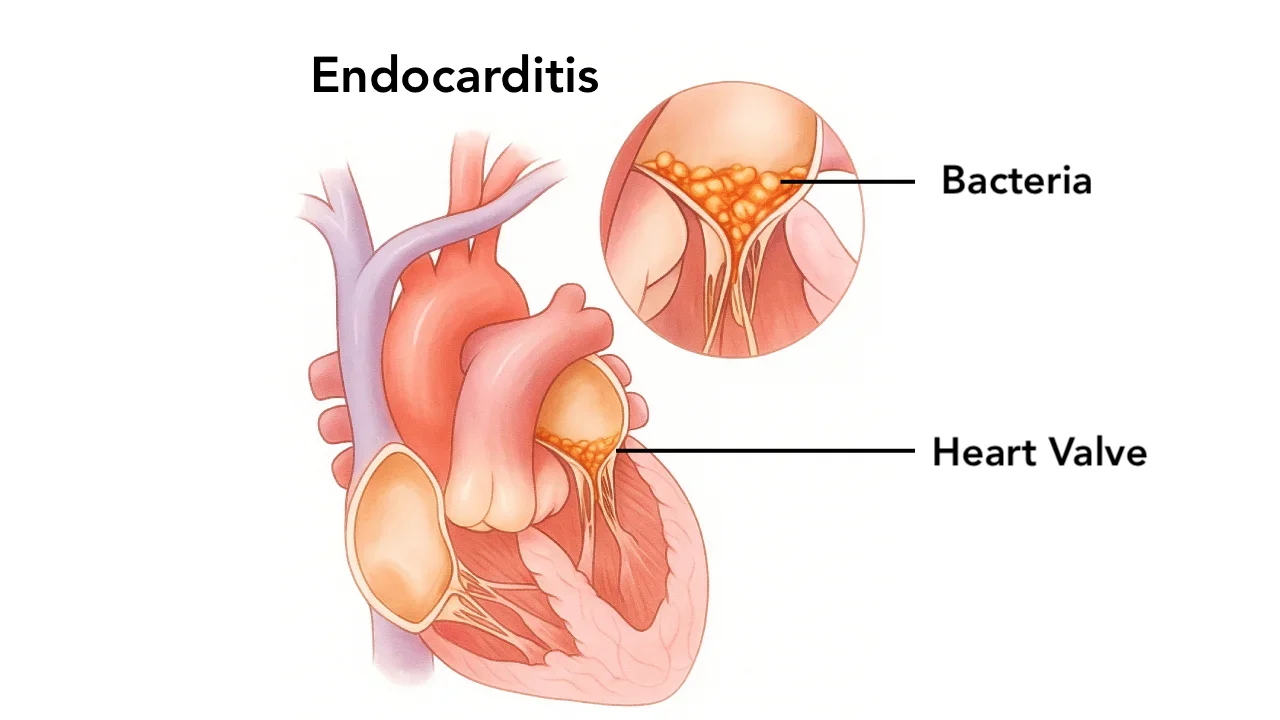
Endocarditis prophylaxis refers to the administration of preventive antibiotics before certain medical or dental procedures in high-risk individuals, with the goal of preventing inflammation of the inner lining of the heart and its valves — a condition known as infective endocarditis.
Infective endocarditis is rare, but when it develops, it can be life-threatening. For this reason, preventive treatment is not recommended for everyone — only for those who are genuinely at elevated risk.
The goal is not to use antibiotics unnecessarily, but to prevent a serious infection in patients who are most vulnerable.
Why Does Infective Endocarditis Occur?
In everyday life, bacteria originating from the mouth, gums, skin, or digestive tract can occasionally enter the bloodstream. In a structurally normal heart, this typically does not cause any problems.
However, in individuals with:
- A prosthetic heart valve
- A prior history of endocarditis
- Congenital heart disease
- Certain valvular conditions or repaired valves
bacteria may adhere to the heart valve or the inner surface of the heart, potentially leading to infective endocarditis.
Who Requires Endocarditis Prophylaxis?
Endocarditis prophylaxis is not recommended for everyone. According to current guidelines, it is indicated only in individuals who fall into a high-risk category.
You are considered at high risk for endocarditis if any of the following apply:
- You have a prosthetic (mechanical or biological) heart valve
- You have a previous history of infective endocarditis
- You have certain forms of congenital heart disease
- Prosthetic material (such as an annuloplasty ring, clip, or patch) was used during heart valve repair
If none of these conditions apply to you, antibiotic prophylaxis is generally not required prior to most procedures.
Which Procedures Require Prophylaxis?
Endocarditis prophylaxis most commonly arises in the context of dental procedures.
Procedures that carry an increased risk include:
- Tooth extraction
- Periodontal (gum) surgery
- Dental scaling and cleaning when bleeding of the gums is anticipated
- Procedures involving manipulation of infected oral tissue
In contrast, the following procedures generally do not require prophylaxis:
- Dental fillings
- Dental X-rays
- Denture adjustments
- Orthodontic appliances
Routine endocarditis prophylaxis is not recommended for gastrointestinal procedures (such as gastroscopy or colonoscopy), urological procedures, or gynecological interventions, except in specific circumstances.
How Is Endocarditis Prophylaxis Administered?
Prophylaxis typically consists of a single dose of an antibiotic taken 30 to 60 minutes before the procedure.
The most commonly used agents include:
- An appropriate oral antibiotic
- An alternative antibiotic in cases of known allergy
The choice of antibiotic and dosage is determined based on your individual health status and any known drug allergies. For this reason, it is essential that you do not take antibiotics on your own initiative without medical guidance.
Do I Need to Take Antibiotics Before Every Dental Visit?
No.
This is one of the most common misconceptions.
Antibiotic prophylaxis may be necessary only if you are in a high-risk group and are undergoing a procedure with a significant risk of bleeding.
Unnecessary antibiotic use can lead to:
- Development of antibiotic resistance
- Adverse side effects
- Disruption of the gut microbiome
Therefore, taking antibiotics before every procedure simply because you have a heart condition is not appropriate.
Why Is Dental Health So Important?
The most effective way to prevent endocarditis is not antibiotics — it is maintaining good oral and dental hygiene.
Regular tooth brushing, flossing, and routine dental check-ups help prevent gum disease, which in turn significantly reduces the risk of bacteria entering the bloodstream.
In other words:
👉 Daily oral hygiene is far more protective than a single dose of antibiotics.
What Should You Do?
- If you have a heart valve condition or a specific cardiac diagnosis, always inform your dentist
- Clarify with your cardiologist whether endocarditis prophylaxis is indicated for you
- Avoid unnecessary antibiotic use
- Maintain consistent oral and dental hygiene