
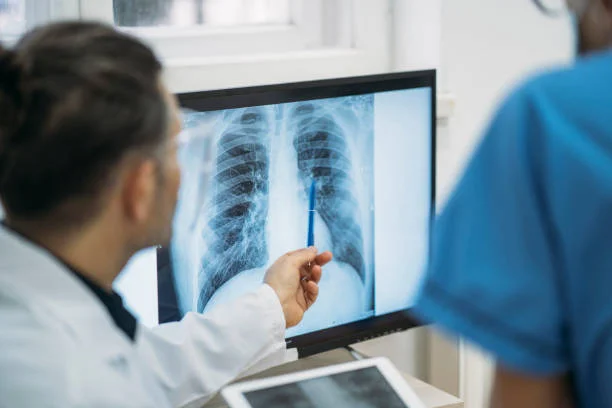
What is a chest X-ray?
A chest X-ray is a simple X-ray examination used to image your lungs and chest cavity. This test allows rapid evaluation of the general condition of your lungs, heart, and chest bones.
It may be requested if you have shortness of breath, cough, fever, chest pain, or after trauma (injury). The procedure is quick, and results are usually available on the same day.
Why is a chest X-ray requested?
Your doctor may request a chest X-ray in the following situations:
- If you experience shortness of breath
- If you have a persistent cough
- If you have fever and sputum production
- If you feel chest pain
- If a lung infection is suspected
- If the chest area needs to be evaluated after trauma
This test helps identify the source of the problem quickly.
What does a chest X-ray show?
A chest X-ray can provide information about the following conditions:
- Lung infection (pneumonia)
- Collapsed lung (pneumothorax)
- Fluid accumulation in the lungs
- Heart enlargement
- Rib fractures
- Lung masses
Some diseases may not be clearly visible on a chest X-ray in the early stages. In such cases, further imaging such as computed tomography (CT) may be recommended.
How is a chest X-ray performed?
During a chest X-ray, you will be asked to stand upright, take a deep breath, and hold your breath briefly. Remaining still for a few seconds is sufficient.
The procedure is painless and usually takes less than one minute. You can return to your normal activities immediately afterward.
What should you do before a chest X-ray?
No special preparation is required for a chest X-ray. However, you may be asked to remove jewelry from the neck and chest area and avoid wearing clothing containing metal.
If you are pregnant or there is a possibility of pregnancy, you must inform the staff before the examination.
Is a chest X-ray safe?
The amount of radiation used in a chest X-ray is very low. It is comparable to the level of radiation you are naturally exposed to in daily life.
It can be performed safely when clinically necessary. However, unnecessary repeat imaging is avoided.
How are chest X-ray results evaluated?
The images are evaluated and reported by a radiologist. The results are then interpreted by your doctor together with your symptoms and physical examination findings.
If needed, further tests or additional imaging studies may be planned.
Reference: Chest X-ray