
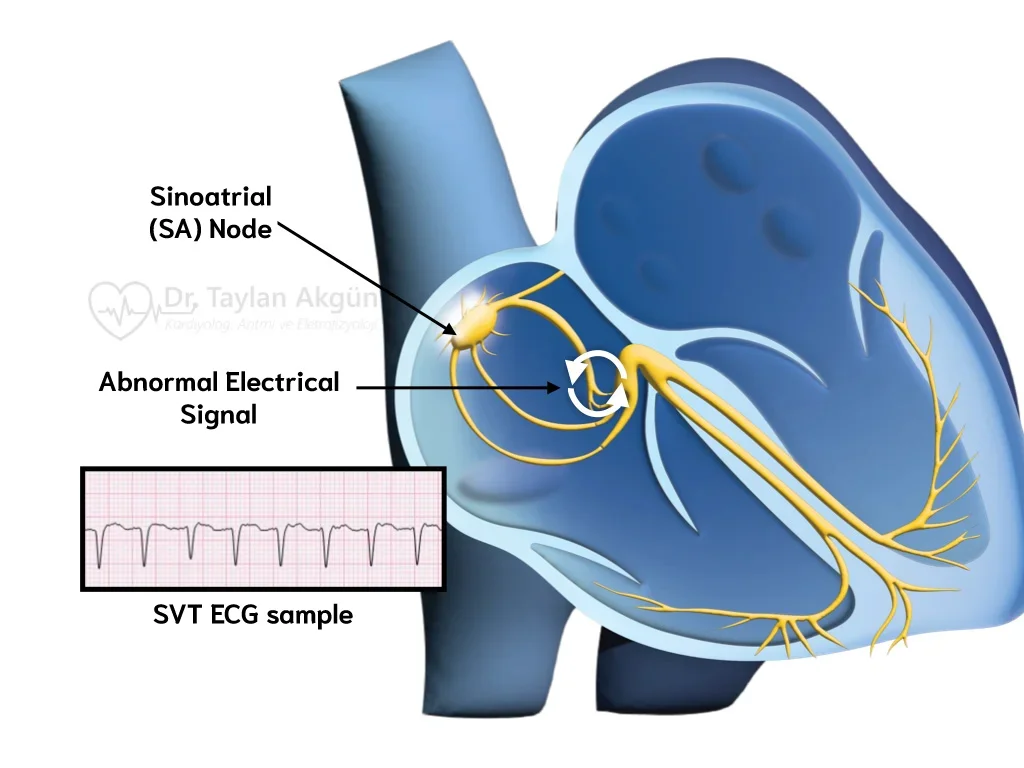
SVT Ablation
SVT ablation is a catheter-based procedure that eliminates the abnormal electrical pathways causing supraventricular tachycardia. The small area of heart tissue responsible for the arrhythmia is destroyed using heat or cold energy, with the goal of permanently stopping rapid rhythm episodes.
What Is SVT?
Supraventricular tachycardia (SVT) is a rapid heart rhythm originating from the upper chambers of the heart. While a normal resting heart rate is 60–100 beats per minute, SVT episodes can drive the rate to 150–250 bpm. Episodes start and stop suddenly.
SVT is rarely life-threatening, but symptoms such as palpitations, shortness of breath, and dizziness can significantly affect quality of life.
Who Is a Candidate for SVT Ablation?
Ablation is considered for patients who experience frequent episodes, do not respond adequately to medication, or prefer to avoid long-term drug therapy. For many SVT types, ablation is now recommended as a first-line treatment option.
It is particularly indicated when episodes cause syncope, are prolonged, or substantially impair daily life. The decision is made following a full cardiology and electrophysiology assessment.
Preparation Before the Procedure
Heart rhythm is evaluated beforehand with an ECG, Holter monitor, and if needed, an electrophysiology study, to precisely locate the source of the arrhythmia.
Certain medications may need to be stopped prior to the procedure. Fasting is usually required on the day of the procedure. Detailed instructions will be provided in advance.
How Is SVT Ablation Performed?
The procedure is non-surgical. Thin catheters are typically advanced to the heart through a vein in the groin. The source of the arrhythmia is first mapped, then controlled heat or cold energy is applied to the target tissue to render it inactive.
SVT ablation generally takes 1–2 hours. Most patients are discharged the same day or the following morning. Recovery is rapid.
Recovery After SVT Ablation
Patients are monitored for a few hours after the procedure. Mild groin discomfort is common. Most people return to normal activities within a few days. Strenuous exercise is discouraged for the first week or two. Follow-up rhythm monitoring is arranged with your doctor.
Success Rates
Success rates vary by SVT subtype but are consistently high overall. For AVNRT, success rates are approximately 95–98%. For AVRT (including WPW syndrome), the rate is around 90–95%. Atrial tachycardia carries a success rate of 85–90%.
Most patients are able to discontinue SVT medications after ablation. The risk of recurrence following a successful procedure is low.