
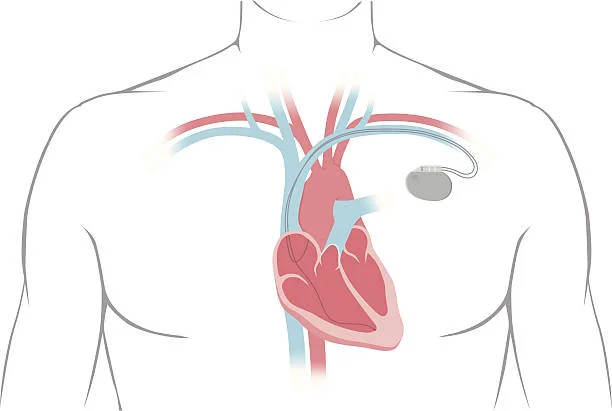
You can usually return to normal life after a pacemaker is implanted. However, paying attention to certain points helps ensure your pacemaker works properly and prevents complications.
The first days require a bit more care. Over time, you will adapt to living with your pacemaker and comfortably resume your daily activities.
What should you pay attention to in the first days?
Wound care
Keep the wound area clean and dry until it heals. For the first 5–7 days, try not to let water touch the wound while bathing. Instead of showering, you may clean yourself with a sponge.
Do not change the dressing unless your doctor advises it. The first follow-up visit is usually after 7–10 days, when the dressing may be changed or removed.
Contact your doctor immediately if you notice:
- Redness
- Swelling
- Discharge
- Bad odor
- Increasing pain
These may indicate infection.
Arm movements
For the first 4–6 weeks, avoid raising the arm on the pacemaker side above shoulder level. This prevents lead displacement.
Avoid heavy lifting. Do not lift more than about 2–3 kg initially. This limit can gradually increase over time.
Avoid sudden or forceful arm movements. Move slowly and in a controlled way. Consult your doctor before starting sports.
Pain management
Mild pain or discomfort at the implantation site is normal. You may use pain relievers recommended by your doctor, usually simple medications like paracetamol.
Activity level
Rest during the first few days, but do not remain completely inactive. Gentle walking at home is encouraged.
Ask your doctor when you can start driving again. Usually, waiting 1–2 weeks is recommended.
Return to work depends on your job:
- Desk jobs: about 1–2 weeks
- Physically demanding jobs: about 4–6 weeks
Daily life with a pacemaker
Electronic devices
Most everyday electronic devices do not affect your pacemaker. You can safely use:
- Mobile phones
- Computers
- TVs
- Microwaves
- Headphones
However:
- Do not carry your phone in the pocket over the pacemaker
- Use the opposite ear when talking on the phone
- Keep the phone at least 15 cm away from the device
Avoid close contact with strong magnets or large speakers.
Security systems
Airport security systems may interact with pacemakers. Inform security staff and show your pacemaker card. Manual screening can be requested.
Store and library security systems are usually safe, but avoid standing near them for long periods. Walk through normally.
Metal detectors do not damage the pacemaker but may trigger alarms.
Medical procedures
Always inform healthcare providers that you have a pacemaker before:
- Surgery
- Dental treatment
- Imaging tests
MRI scans may require special precautions. Many modern pacemakers are MRI-compatible, but always inform the radiology team.
Electrocautery used during surgery may interfere with pacemakers, so coordination between your cardiologist and surgeon is important.
If you receive radiotherapy, inform your oncologist. The pacemaker should remain outside the radiation field.
Always inform your dentist as well.
Physical activity and exercise
After full recovery, most activities are safe:
- Walking
- Swimming
- Cycling
Avoid contact sports such as football, basketball, or boxing, as chest trauma may damage the device.
Avoid excessive strain and consult your doctor about lifting limits.
Driving
You can usually resume driving after recovery. Ensure the seatbelt does not press directly on the pacemaker. Seatbelt pads may help.
Travel
Traveling with a pacemaker is generally safe.
Precautions include:
- Always carry your pacemaker ID card
- Obtain an English medical report if traveling abroad
- Keep the device model and serial number recorded
- Identify nearby medical facilities before traveling
- Carry extra medications
Air travel is safe; altitude does not affect pacemakers.
Sexual activity
You may resume sexual activity after recovery, usually after 4–6 weeks. Consult your doctor.
If you experience palpitations, chest pain, or shortness of breath during activity, stop and seek medical advice.
Situations to avoid
Strong electromagnetic fields
Avoid strong magnetic fields or electrical sources such as:
- Industrial generators
- Welding equipment
- High-voltage power lines
- Strong magnets close to the device
Household appliances are generally safe.
Occupational considerations
Some professions may pose risks, including:
- Power plant work
- Industrial welding
- Radar or transmitter stations
- Heavy machinery operation
Discuss workplace safety with your doctor and employer.
Regular follow-up is essential
Pacemaker checks
Pacemakers require regular follow-up.
- First check: usually after 2–4 weeks
- Later checks: every 3–6 months
During follow-up:
- Battery status is assessed
- Lead function is checked
- Device settings are optimized
Battery life typically ranges from 5 to 15 years. Replacement is planned before depletion.
Some modern devices allow remote monitoring, but annual in-person visits are still recommended.
Warning signs to watch for
Contact your doctor promptly if you experience:
- Dizziness or fainting
- Palpitations or irregular heartbeat
- Shortness of breath
- Chest pain
- Persistent hiccups
- Muscle twitching near the device
- Signs of wound infection
- Device movement or protrusion
Carry your pacemaker ID card
Always carry your pacemaker identification card. It contains:
- Your personal details
- Device brand and model
- Implant date
- Doctor contact information
This is important during emergencies and security checks.
Medication use
A pacemaker usually does not change medication use, but:
- Inform your doctor about all medications
- Consult before starting or stopping drugs
- Take medications regularly
- Monitor for allergic reactions
- Keep anticoagulant follow-ups if applicable
Living normally with a pacemaker
You can live a normal life with a pacemaker. Many people feel better after implantation because their heart rhythm becomes stable.
Some anxiety is normal initially. Most people adapt over time.
Reference: https://pubmed.ncbi.nlm.nih.gov/584717/