
- Right bundle branch block: what is it?
- What are the symptoms of right bundle branch block?
- What causes right bundle branch block?
- How is right bundle branch block diagnosed?
- When should you be concerned?
- Is there a treatment for right bundle branch block?
- Does right bundle branch block affect daily life?
- Key points to remember
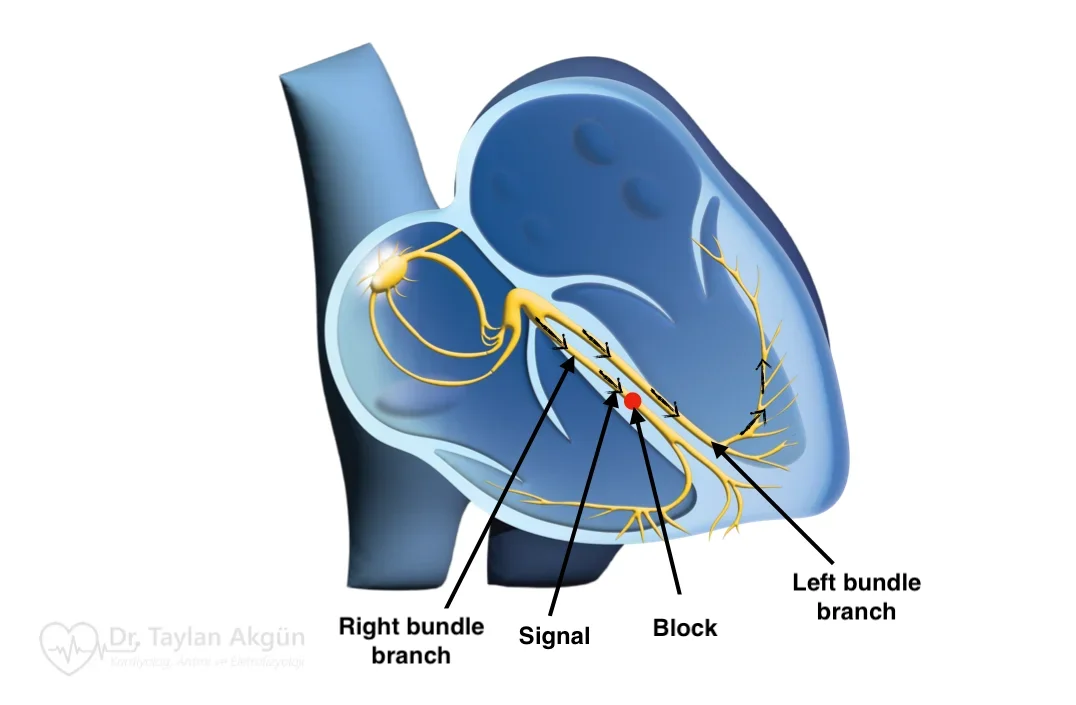
Right bundle branch block: what is it?
Right bundle branch block (RBBB) is a condition in which the electrical signals of the heart are delayed or blocked as they travel to the right ventricle. As a result, the right ventricle contracts later than normal and in a slightly different pattern.
RBBB may be a sign of an underlying heart or lung condition, but it can also be found in otherwise healthy individuals. It is detected on an electrocardiogram (ECG) and, by itself, usually does not cause serious problems. Whether treatment is needed depends on the patient’s overall health and the presence of other heart conditions.
What are the symptoms of right bundle branch block?
Right bundle branch block most often causes no symptoms. Many people learn they have RBBB incidentally during a routine ECG examination.
In some cases, particularly when RBBB is associated with other heart problems, the following symptoms may occur:
- Shortness of breath
- Fatigue
- Dizziness
- A feeling of fainting or near-fainting
If you experience these symptoms, a cardiology evaluation is recommended.
What causes right bundle branch block?
Right bundle branch block can occur for several reasons. In some individuals—especially older adults or athletes—it may be present without any underlying disease and can be considered a normal variant or a congenital finding.
More commonly, RBBB is associated with heart-related conditions, including:
- Previous heart attack
- Inflammation of the heart muscle (myocarditis)
- Congenital heart disease
- Prior heart surgery
- Cardiomyopathies
Conditions that place strain on the right side of the heart may also lead to RBBB, such as pulmonary hypertension or pulmonary embolism.
In addition, certain systemic diseases (for example, scleroderma or Chagas disease), electrolyte imbalances, and side effects of some medications can contribute to the development of right bundle branch block.
In most cases, isolated RBBB is not dangerous. However, identifying and managing any underlying condition is important.
How is right bundle branch block diagnosed?
Right bundle branch block is diagnosed using an electrocardiogram (ECG). This is a simple, painless test that records the electrical activity of the heart. Characteristic ECG findings allow physicians to identify RBBB.
To investigate the cause, your doctor may recommend:
- A detailed medical history and physical examination
- Additional cardiac tests (such as echocardiography or an exercise stress test)
- Blood tests in selected cases
When should you be concerned?
Isolated right bundle branch block, without any other heart disease, usually does not require concern. Most people do not need treatment and can continue their normal daily activities.
However, you should seek medical evaluation if:
- RBBB is accompanied by other heart conditions
- You experience shortness of breath, chest pain, palpitations, or fainting
- Additional abnormalities are present on the ECG
- Right bundle branch block appears suddenly
Is there a treatment for right bundle branch block?
In most cases, isolated right bundle branch block itself does not require treatment. Management focuses on the underlying cause:
- If RBBB is not linked to any disease, no treatment is needed and regular follow-up is sufficient
- If an underlying heart condition is present, treatment is directed at that condition
- In rare cases, especially when other conduction abnormalities coexist, a pacemaker may be required
Does right bundle branch block affect daily life?
Most people with isolated RBBB can live normal lives. General recommendations include:
- Attending regular medical check-ups
- Following your doctor’s advice
- Maintaining a healthy diet and regular physical activity
- Avoiding smoking
- Keeping blood pressure under control
- Managing stress
Key points to remember
Right bundle branch block usually does not require urgent treatment
- If RBBB is detected on an ECG, your doctor will assess for underlying causes
- Report any new or concerning symptoms to your physician
- Regular follow-up is the best approach to protecting heart health
Reference: RBBB