
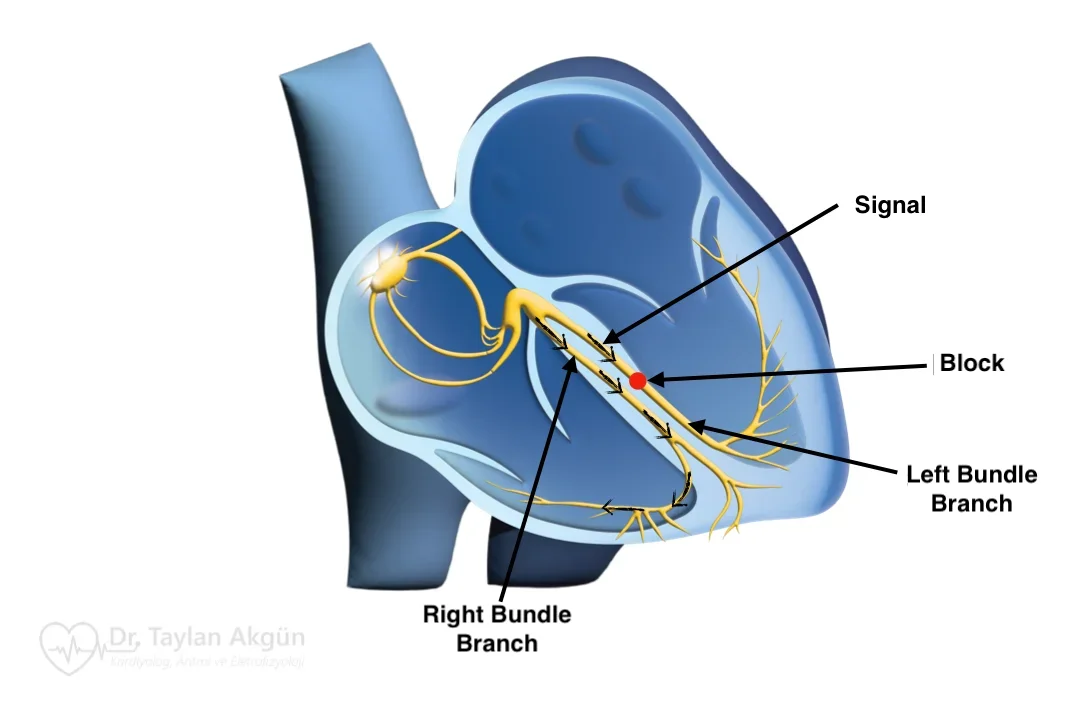
- What is left bundle branch block?
- What are the symptoms of left bundle branch block?
- What causes left bundle branch block?
- How is left bundle branch block diagnosed?
- How is left bundle branch block treated?
- What should I pay attention to in daily life?
- What is the long-term outlook of left bundle branch block?
What is left bundle branch block?
Left bundle branch block (LBBB) is a condition in which the electrical signals of the heart are delayed or interrupted as they travel to the left ventricle. As a result, the left side of the heart contracts later and in an abnormal sequence.
LBBB is most often associated with underlying heart disease, although it can occasionally be seen in otherwise healthy individuals. It is not a heart rhythm disorder itself, but rather a problem of electrical conduction. Left bundle branch block is detected on an electrocardiogram (ECG), and the need for treatment depends on symptoms and the underlying cause.
What are the symptoms of left bundle branch block?
Left bundle branch block itself often causes no symptoms and is frequently discovered incidentally on an ECG performed for other reasons. However, symptoms may occur depending on the underlying heart disease.
Possible symptoms include shortness of breath, fatigue or weakness, chest discomfort or pain, dizziness, or a feeling of fainting.
Advanced symptoms
When left bundle branch block leads to impaired pumping function of the heart, symptoms of heart failure may develop. These can include swelling of the legs, fluid accumulation in the abdomen, waking at night with shortness of breath, and marked fatigue.
In severe cases, fainting (syncope) episodes may occur. This is usually related to a significant slowing of the heart rate or transient pauses in electrical activity, leading to reduced blood flow to the brain. Any clear worsening of symptoms should prompt medical evaluation.
When should I see a doctor?
Left bundle branch block can be a serious finding, and medical evaluation is especially important in the following situations:
- If LBBB is newly detected, as it may indicate acute coronary artery disease such as a heart attack
- If chest pain, shortness of breath, or fainting occurs
- If there are signs of heart failure, such as leg swelling or worsening breathlessness
What causes left bundle branch block?
Left bundle branch block can occasionally be found in healthy individuals, but it most commonly indicates an underlying cardiac condition. Common causes include:
- Coronary artery disease
- Previous heart attack
- High blood pressure
- Heart valve disease
- Weakening of the heart muscle
- Inflammation of the heart (myocarditis)
- Congenital heart disease
- After heart surgery
- Advanced age
LBBB can affect the heart’s pumping efficiency, particularly if another heart condition is present, and should therefore be evaluated carefully.
How is left bundle branch block diagnosed?
The diagnosis of left bundle branch block is usually made with an electrocardiogram (ECG). For a more comprehensive assessment, additional tests may be required, including:
- Cardiac ultrasound (echocardiography)
- Exercise stress testing
- Imaging of the coronary arteries
- Blood tests
How is left bundle branch block treated?
Treatment of left bundle branch block depends on the underlying cause. If no heart disease is present, regular follow-up may be sufficient and specific treatment is often not required.
When an underlying cardiac condition exists, treatment may include medications, coronary interventions, or valve therapy as appropriate. In patients with heart failure and significant electrical dyssynchrony, cardiac resynchronization therapy (CRT) may be recommended to improve heart function.
In selected patients at high risk of sudden cardiac arrest, an implantable cardioverter-defibrillator (ICD) may also be required.
What should I pay attention to in daily life?
If you have left bundle branch block without other heart disease, you can usually continue your normal daily activities. However, the following measures are recommended:
- Attend regular medical follow-ups
- Follow a heart-healthy diet (limit salt and fat intake)
- Engage in light physical activity after consulting your doctor
- Avoid smoking
- Keep blood pressure under control
- Avoid excessive physical strain
- Report any new or worsening symptoms promptly
What is the long-term outlook of left bundle branch block?
The long-term outcome of left bundle branch block depends on the underlying cause, heart function, and overall health status. Isolated LBBB without structural heart disease is often considered relatively benign but may still require long-term follow-up for cardiovascular risk.
When LBBB is associated with structural heart disease or heart failure, prognosis may be affected. LBBB, particularly with a QRS duration greater than 150 ms, is a known risk factor for the development and progression of heart failure.
Patients with left bundle branch block may also have an increased risk of sudden cardiac death, especially in the presence of severe heart failure or significant left ventricular dysfunction. In appropriately selected patients, cardiac resynchronization therapy (CRT) can significantly improve symptoms, quality of life, and survival.
Reference: LBBB