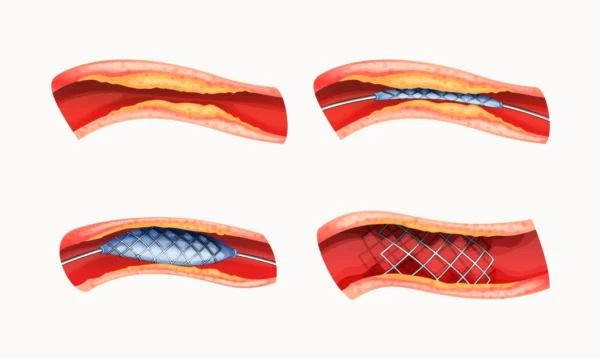
Transcatheter Aortic Valve Replacement (TAVR) is a minimally invasive procedure used to treat severe aortic valve disease, most commonly aortic stenosis. In this condition, the aortic valve becomes narrowed and stiff, making it difficult for blood to flow from the heart to the rest of the body.
TAVR allows the diseased valve to be treated without open-heart surgery, by placing a new valve inside the existing one using a catheter-based approach.
Why Is TAVR Performed?
The aortic valve controls blood flow from the heart’s main pumping chamber into the body. When this valve becomes severely narrowed, the heart must work much harder to push blood forward. Over time, this can lead to symptoms and heart failure.
TAVR is performed to:
- Relieve symptoms such as shortness of breath, chest pain, fatigue, or fainting
- Improve quality of life and daily function
- Reduce the strain on the heart and improve survival in severe aortic stenosis
Who Is a Candidate for TAVR?
TAVR is considered in patients with severe, symptomatic aortic stenosis. It was initially developed for people who were at high or prohibitive risk for open-heart surgery, but it is now widely used across low-, intermediate-, and high-risk patients, depending on individual factors.
The decision to proceed with TAVR is made by a multidisciplinary heart team and depends on age, overall health, valve anatomy, vascular access, and patient preferences.
How to Prepare for TAVR
Before TAVR, patients undergo detailed testing to confirm valve severity and ensure the procedure can be done safely. These evaluations typically include echocardiography, CT imaging of the heart and blood vessels, blood tests, and coronary artery assessment.
You may be asked to adjust certain medications before the procedure. Clear instructions regarding fasting and hospital admission are provided in advance.
What Happens During the TAVR Procedure?
TAVR is performed in a specialized hospital unit. Most procedures are done with conscious sedation, meaning you are relaxed and comfortable, while some are performed under general anesthesia.
A catheter is inserted through a blood vessel—most commonly in the groin—and guided to the heart. The new valve is carefully positioned inside the diseased aortic valve and then expanded. Once in place, the new valve immediately begins to function, pushing the old valve leaflets aside.
The catheter is then removed, and the access site is closed.
What Will I Feel During and After TAVR?
During the procedure, most patients feel little to no discomfort. Afterward, it is common to feel tired for a short period.
Many patients notice rapid improvement in symptoms, often within days. Breathing becomes easier, energy levels improve, and exercise tolerance increases.
Recovery After TAVR
Recovery after TAVR is generally faster than after open-heart surgery. Most patients are able to sit up and walk within a day and are discharged home within a few days.
Normal daily activities can usually be resumed relatively quickly, with gradual increase in activity as advised by the medical team.
Medications After TAVR
After TAVR, medications are used to support the new valve and reduce the risk of complications. These may include blood-thinning medications for a defined period, depending on individual risk factors and heart rhythm.
Your doctor will provide a personalized medication plan after the procedure.
Risks of TAVR
TAVR is a well-established and widely performed procedure. As with any invasive treatment, risks exist and are carefully discussed beforehand.
Potential risks include bleeding, vascular complications, heart rhythm disturbances, stroke, or the need for a pacemaker. Serious complications are uncommon, especially in experienced centers.
How Successful Is TAVR?
TAVR is highly effective in relieving aortic valve obstruction and improving symptoms. Most patients experience significant and sustained improvement in quality of life.
Long-term outcomes depend on age, underlying heart disease, and overall health, but for appropriately selected patients, TAVR provides durable valve function and excellent clinical results.
In Summary
Transcatheter Aortic Valve Replacement is a minimally invasive procedure that treats severe aortic stenosis by placing a new valve inside the diseased aortic valve without open-heart surgery. It is recommended for many patients with symptomatic severe valve disease and offers rapid recovery, symptom relief, and improved heart function when performed in experienced centers.
Reference: TAVR