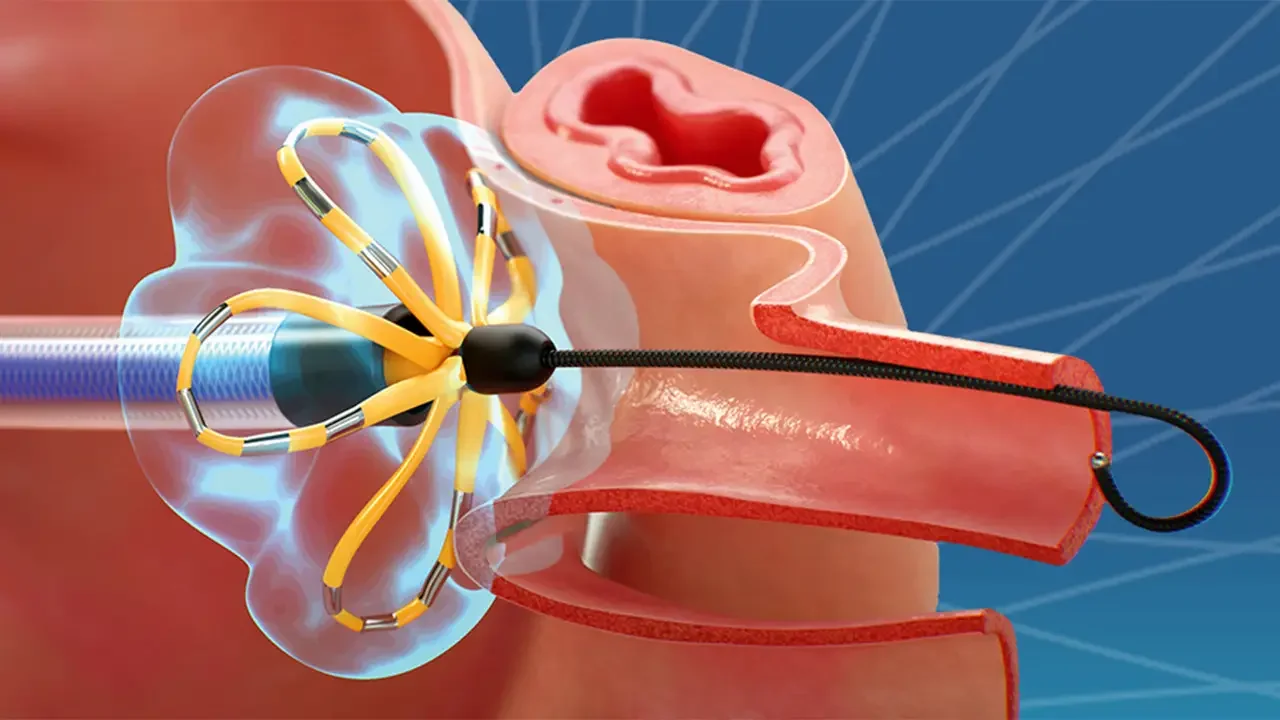
Pulsed Field Ablation (PFA) is a new-generation catheter ablation technology used primarily in the treatment of atrial fibrillation. Unlike traditional ablation methods that rely on heat or cold, pulsed field ablation uses very short, high-energy electrical pulses to selectively affect heart muscle cells while largely sparing surrounding tissues.
The main goal of pulsed field ablation is the same as other AF ablation techniques: to safely and effectively isolate abnormal electrical signals—most commonly around the pulmonary veins—while minimizing collateral damage.
- How Pulsed Field Ablation Works
- How Pulsed Field Ablation Is Used in Atrial Fibrillation
- How PFA Differs From Traditional Ablation Techniques
- Potential Advantages of Pulsed Field Ablation
- Who May Benefit From Pulsed Field Ablation?
- Safety and Current Clinical Experience
- Recovery After Pulsed Field Ablation
- In Summary
How Pulsed Field Ablation Works
Pulsed field ablation is based on a biological principle called electroporation. When brief electrical pulses are applied to heart tissue, tiny pores form in the cell membranes of heart muscle cells. This disrupts their electrical function and leads to controlled cell death in the targeted area.
A key advantage of this mechanism is tissue selectivity. Heart muscle cells are more sensitive to these electrical pulses than nearby structures such as the esophagus, phrenic nerve, or blood vessels. As a result, pulsed field ablation can create effective lesions while reducing injury to non-cardiac tissues.
How Pulsed Field Ablation Is Used in Atrial Fibrillation
In atrial fibrillation treatment, pulsed field ablation is most commonly used to perform pulmonary vein isolation. Catheters designed specifically for PFA are positioned around the pulmonary veins, and a series of rapid electrical pulses are delivered to block abnormal signals that trigger AF.
Because lesion formation with PFA is extremely fast, pulmonary vein isolation can often be achieved more efficiently compared with traditional techniques. This has the potential to shorten procedure times while maintaining consistent lesion quality.
How PFA Differs From Traditional Ablation Techniques
Traditional ablation methods use radiofrequency energy (heat) or cryoablation (freezing) to destroy abnormal tissue. While effective, these techniques rely on thermal injury, which can affect nearby structures if not carefully controlled.
Pulsed field ablation does not rely on heat or cold. By using electrical energy instead, it reduces the risk of complications related to thermal spread. This difference is particularly important in areas where the heart lies close to sensitive organs.
Potential Advantages of Pulsed Field Ablation
Pulsed field ablation has generated significant interest because of its safety profile and procedural efficiency. Its selective action on heart muscle tissue may lower the risk of injury to the esophagus, nerves, and blood vessels. The speed of lesion creation can also make procedures more predictable and reproducible.
These features make PFA especially attractive in atrial fibrillation ablation, where large areas often need to be treated with precision.
Who May Benefit From Pulsed Field Ablation?
Pulsed field ablation is currently used mainly for patients undergoing catheter ablation for atrial fibrillation, particularly those requiring pulmonary vein isolation. It may be suitable for both paroxysmal and persistent AF, depending on individual anatomy and treatment strategy.
As this technology continues to evolve, its role may expand to other arrhythmias, but at present its primary application remains atrial fibrillation.
Safety and Current Clinical Experience
Early clinical studies and real-world experience suggest that pulsed field ablation is highly effective and associated with a favorable safety profile. However, it is still a relatively new technology, and long-term outcome data are continuing to emerge.
For this reason, pulsed field ablation is performed in specialized centers with experience in advanced electrophysiology procedures.
Recovery After Pulsed Field Ablation
Recovery after pulsed field ablation is similar to that after other catheter ablation procedures. Most patients stay in the hospital overnight and return home the following day. Temporary palpitations or mild chest discomfort may occur during the early healing phase and usually resolve with time.
Follow-up focuses on rhythm monitoring and medication adjustment rather than on the ablation technology itself.
In Summary
Pulsed Field Ablation is an innovative ablation technology that uses brief electrical pulses to selectively target heart muscle cells. By avoiding thermal injury, PFA offers a promising combination of safety, efficiency, and effectiveness, particularly for atrial fibrillation ablation. While long-term data are still evolving, pulsed field ablation represents a major step forward in the treatment of cardiac arrhythmias.
Reference: PFA